Water Softener Flow Rate: Why Gallons Per Minute Matter
Quick Answer: What Flow Rate Should a Water Softener Have?
Your water softener should be able to handle the amount of water your home can use at one time without creating a major restriction in flow.
Flow rate is measured in gallons per minute, or GPM. A home with a one-inch incoming water line may be capable of moving roughly 21–25 gallons per minute under certain plumbing conditions.
That does not automatically mean every home with a one-inch line will receive exactly that flow. Water pressure, plumbing layout, fixtures, and other factors can affect actual performance.
The important part is making sure your water treatment system is properly matched to the home.
Key Takeaways
- Flow rate matters when choosing a water softener. Your system needs to be able to handle the amount of water your home may use at one time without unnecessarily restricting flow.
- Household size and square footage are not enough on their own. Plumbing size, water pressure, simultaneous fixture use, and water hardness should also be considered.
- Proper sizing helps support consistent whole-home treatment. A system matched to your home’s plumbing and water conditions is better equipped to treat water during periods of higher demand.
When homeowners shop for a water softener, they are often asked two questions first: How many people live in the house? And how big is the home?
Those questions can help estimate how much water a household uses, but they do not tell the whole story.
One of the most important measurements when choosing a water softener is flow rate, or how many gallons of water can move through your plumbing and treatment system per minute.
In a recent video, Emily from Jason’s Water Systems visited a new construction home to show exactly why this matters.
Why Flow Rate Matters When Choosing a Water Softener
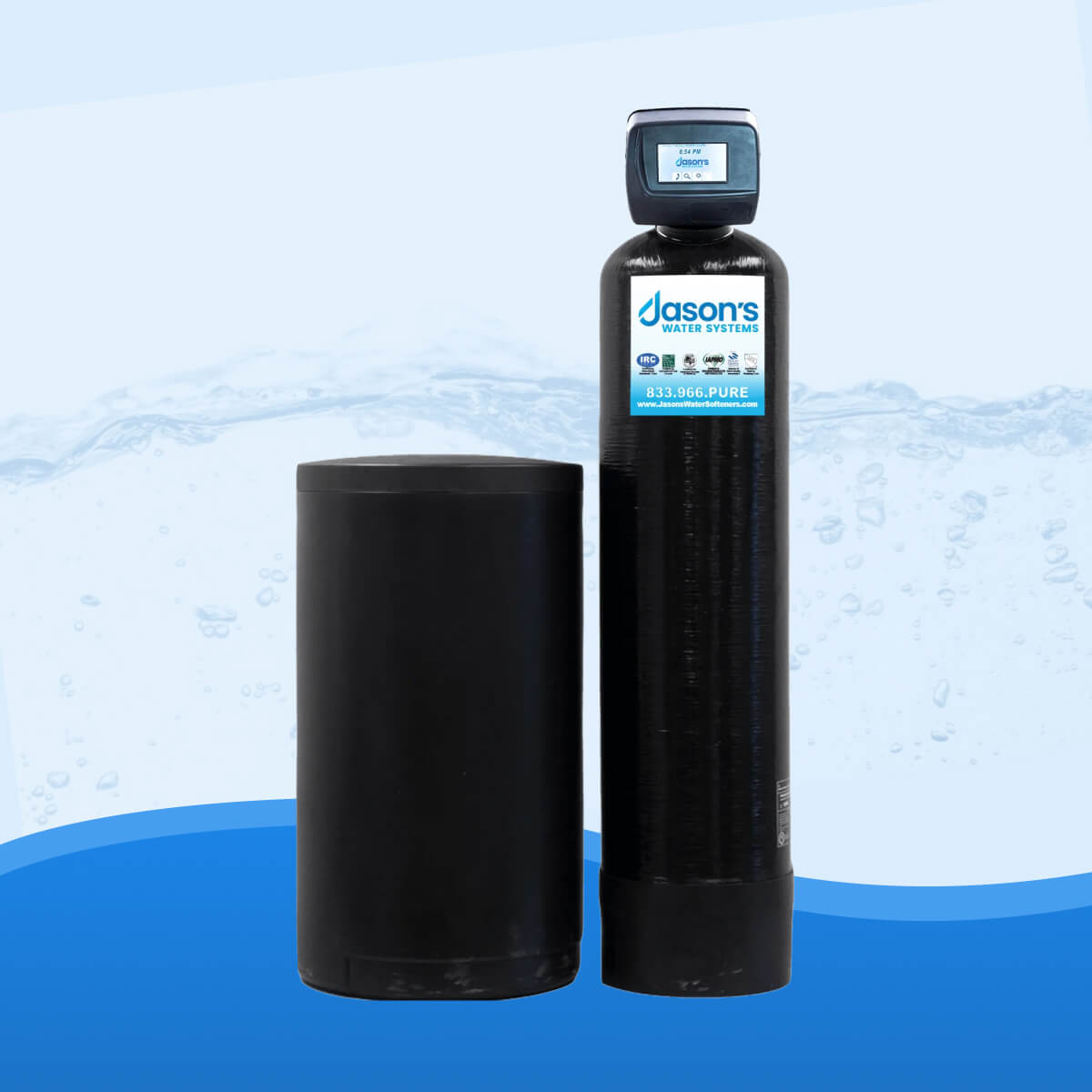
A whole-house water softener and filtration system is typically installed where the main water supply enters the home.
That means nearly every fixture and water-using appliance downstream of the system may rely on water passing through that equipment first.
Think about what can happen at the same time:
- Someone takes a shower
- The dishwasher runs
- The washing machine fills
- Another person turns on a sink
- A toilet refills
Your home’s water demand can increase quickly.
If the treatment system is not designed to handle the flow moving through it, performance can suffer when water demand is high.
What Does GPM Mean?
GPM stands for gallons per minute.
It measures how much water flows through a pipe, fixture, appliance, or water treatment system during one minute.
When Emily looks at the one-inch plumbing loop in the video, she explains that the plumbing may allow roughly 21–25 gallons per minute to enter the home.
If that amount of water can move through the home’s plumbing, the water softener should be selected with that potential demand in mind.
Why Household Size Alone Does Not Tell You Flow Rate
The number of people living in your home is useful when estimating total water consumption and system capacity.
But it does not determine how the house was plumbed.
A four-person household could live in a home with very different plumbing from another four-person household.
Flow rate can be affected by:
- Main water-line size
- Water pressure
- Plumbing configuration
- Number and type of fixtures
- Simultaneous water demand
That is why choosing the right size water softener should involve more than simply counting bedrooms or residents.
What Happens if a Water Softener Cannot Keep Up?
A water softener creates a specific path for incoming water to travel through treatment media.
The system needs enough service flow capacity to handle the water demand placed on it.
If several fixtures are operating at once and demand exceeds the system’s capabilities, homeowners may experience reduced water flow or treatment performance depending on the equipment and installation.
A properly selected system is designed to treat the home's water without becoming an unnecessary bottleneck.
Water Hardness Also Matters
Flow rate is important, but it is not the only factor.
Your water hardness determines how much calcium and magnesium the softening system needs to remove.
San Antonio and surrounding communities are known for hard water, so homeowners may notice:
- Mineral deposits around faucets
- Water spots on dishes
- Scale inside appliances
- Soap scum
- Stiff-feeling laundry
- Dry-feeling hair and skin
Testing your water helps determine the hardness level before selecting a system.
How Does a Water Softener Treat High-Flow Water?
Traditional water softening uses ion-exchange resin to reduce calcium and magnesium.
Water needs sufficient contact with the treatment media while still moving through the system at a rate that supports household demand.
That is one reason equipment specifications matter.
At Jason’s Water Systems, our systems are designed to provide whole-home treatment with service flow rates that can accommodate demanding household water use when properly selected and installed.
Don’t Choose a Water Softener Based on Guesswork
A water softener should be selected for the water and plumbing system it is actually treating.
Household size matters. Water hardness matters. Total usage matters.
But flow rate matters too.
Before buying a system, make sure you understand:
- Your water hardness
- Incoming plumbing size
- Household water demand
- System service flow rate
- Filtration needs
Jason’s Water Systems can evaluate your home's water and recommend a system based on those conditions instead of relying on a one-size-fits-all recommendation.
Schedule a free water test and let Jason’s Water Systems help you understand what your home actually needs.
Frequently Asked Questions
What does flow rate mean for a water softener?
Flow rate measures how much water can move through the system in one minute and is typically measured in gallons per minute, or GPM. Your water softener should be capable of handling the flow your household may require during normal use.
How do I know my home’s water flow rate?
Flow rate depends on factors such as the size of your incoming water line, water pressure, plumbing configuration, and how many fixtures are being used at once. A water treatment professional can evaluate your plumbing and help determine the appropriate system capacity.
Does the number of people in my home determine water softener size?
Household size is useful for estimating total water usage and regeneration needs, but it does not determine your home’s actual plumbing flow rate. Both water usage and flow rate should be considered when choosing a system.
Is a one-inch water line enough for a whole-house water softener?
A one-inch water line can support significant household water flow, but the right water softener depends on the actual plumbing configuration, pressure, water hardness, and system specifications. The water softener should be selected so it can keep up with the home’s demand.
What happens if my water softener has too low of a flow rate?
If household demand exceeds what the system is designed to handle, you may notice reduced water flow or reduced treatment performance during periods when several fixtures or appliances are running at the same time.
Does water hardness affect how I should size a water softener?
Yes. Hardness determines how much calcium and magnesium the softener needs to remove, while flow rate helps determine how quickly the system needs to treat water. Both are important when selecting the right system.