Signs of Hard Water in Your Kitchen
Your kitchen is often one of the first places you can see evidence of hard water. White residue around the faucet, buildup inside the dishwasher, cloudy spots on drying racks, and mineral deposits near your refrigerator water dispenser can all point to elevated levels of calcium and magnesium in your water.
For homeowners in San Antonio and surrounding Central Texas communities, these signs can be especially common because local water is often classified as hard or very hard.
Quick Answer: What Are the Signs of Hard Water in Your Kitchen?
Common signs of hard water in the kitchen include white or chalky residue around faucets, mineral buildup inside the dishwasher, cloudy film on dishes and drying racks, water spots, and deposits around refrigerator water dispensers.
These marks are often left behind when water evaporates and calcium and magnesium remain on the surface.
Key Takeaways
- Hard water leaves minerals behind. Calcium and magnesium can create white film, scale, water spots, and residue throughout the kitchen.
- Check multiple areas of your kitchen. Your dishwasher, faucet, drying rack, and refrigerator water dispenser can all show signs of hard water.
- Cleaning removes buildup, but it does not change your water hardness. A whole-house water softener treats the minerals responsible for recurring hard water deposits.
Why Does Hard Water Leave Buildup in Your Kitchen?
Hard water contains dissolved minerals, primarily calcium and magnesium.
As water moves through your kitchen, small amounts are left behind on sinks, appliances, dishes, and fixtures. When the water evaporates, those minerals do not evaporate with it. Instead, they can remain on the surface as white film, chalky residue, or scale.
The harder your water is, the more frequently you may notice mineral buildup returning after you clean.
Check Your Dishwasher for Hard Water Buildup
One of the first places to look for hard water is inside your dishwasher.
Open the dishwasher and check the filter, spray arms, racks, and interior surfaces. White or crusty deposits in these areas may be caused by calcium and magnesium rather than food or dirt.
Hard water can also leave:
- Spots on clean dishes
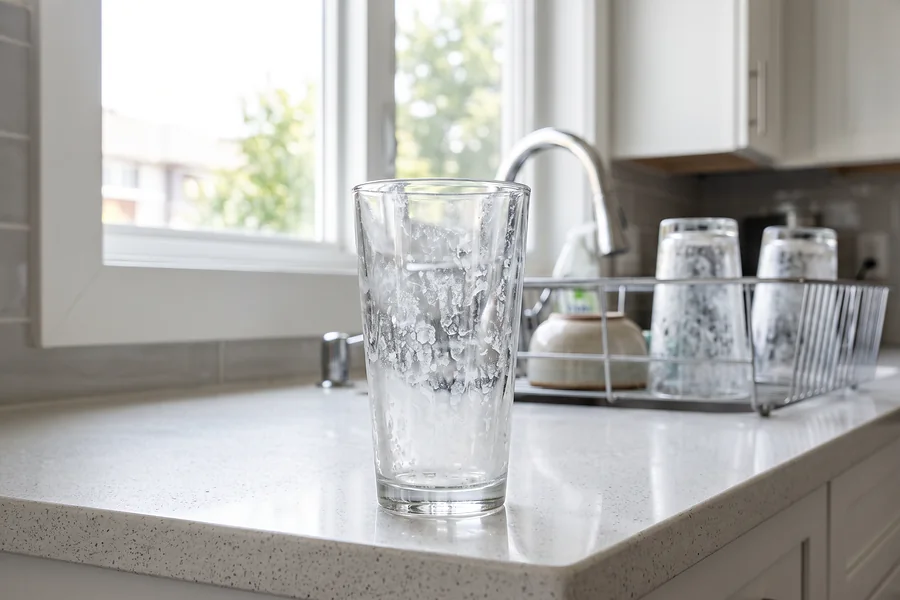
- Cloudy glassware
- Scale around spray jets
- Chalky residue inside the dishwasher
Over time, hard water can affect your dishwasher beyond the appearance of the interior. Mineral deposits can accumulate around components that regularly come into contact with water.
Regular cleaning can remove existing deposits, but it does not prevent new minerals from entering the dishwasher with every wash cycle.
Look for White Film on Your Drying Rack
Your dish-drying rack is another easy place to spot evidence of hard water.
Water left on freshly washed dishes drips onto the rack or tray beneath it. As that water dries, calcium and magnesium can remain behind.
This often appears as:
- White film
- Cloudy residue
- Water spots
- Chalky deposits
If the drying rack looks cloudy again shortly after cleaning it, your water may be contributing to the recurring buildup.
Check Around Your Kitchen Faucet
The area around your kitchen faucet is exposed to water throughout the day, making it another common location for hard water deposits.
Small splashes collect around the faucet base, handles, and sink. Once those droplets evaporate, mineral deposits can remain.
You may notice white crust, spots, or scale that becomes increasingly difficult to remove over time.
Cleaning can help remove what is already there. Our guide to removing hard water stains explains ways to address existing mineral residue on household surfaces.
However, if the same buildup continues to return, the underlying issue is likely the water rather than how often you clean.
Check Your Refrigerator Water and Ice Dispenser
Your refrigerator can show the same signs of hard water.
Look around and underneath the water and ice dispenser. Drips from drinking water or melting ice can dry on the dispenser tray and surrounding surfaces.
Once again, the water evaporates while calcium and magnesium remain.
If similar deposits are appearing around your refrigerator, faucet, dishwasher, and drying rack, those areas may all be showing evidence of the same whole-home hard water problem.
Why Does Hard Water Buildup Keep Coming Back?
Cleaning hard water deposits only addresses the minerals that have already accumulated.
The cycle typically looks like this:
- Hard water reaches a surface.
- The water evaporates.
- Calcium and magnesium remain behind.
- The deposits are cleaned away.
- More hard water reaches the surface.
This is why homeowners can feel like they are constantly cleaning the same white residue.
You are removing the buildup, but the water supplying your kitchen has not changed.
Is Hard Water Unsafe?
Hard water does not automatically mean that your municipal water is unsafe.
Water hardness refers primarily to the amount of dissolved calcium and magnesium present in the water.
For many homeowners, the main concerns are the effects those minerals can have throughout the home, including scale, water spots, soap scum, and deposits in water-using appliances.
San Antonio is known for hard water, although hardness levels can vary by water source and location. Learn more about San Antonio water quality and the conditions that may affect your home.
How Does a Water Softener Help With Kitchen Buildup?
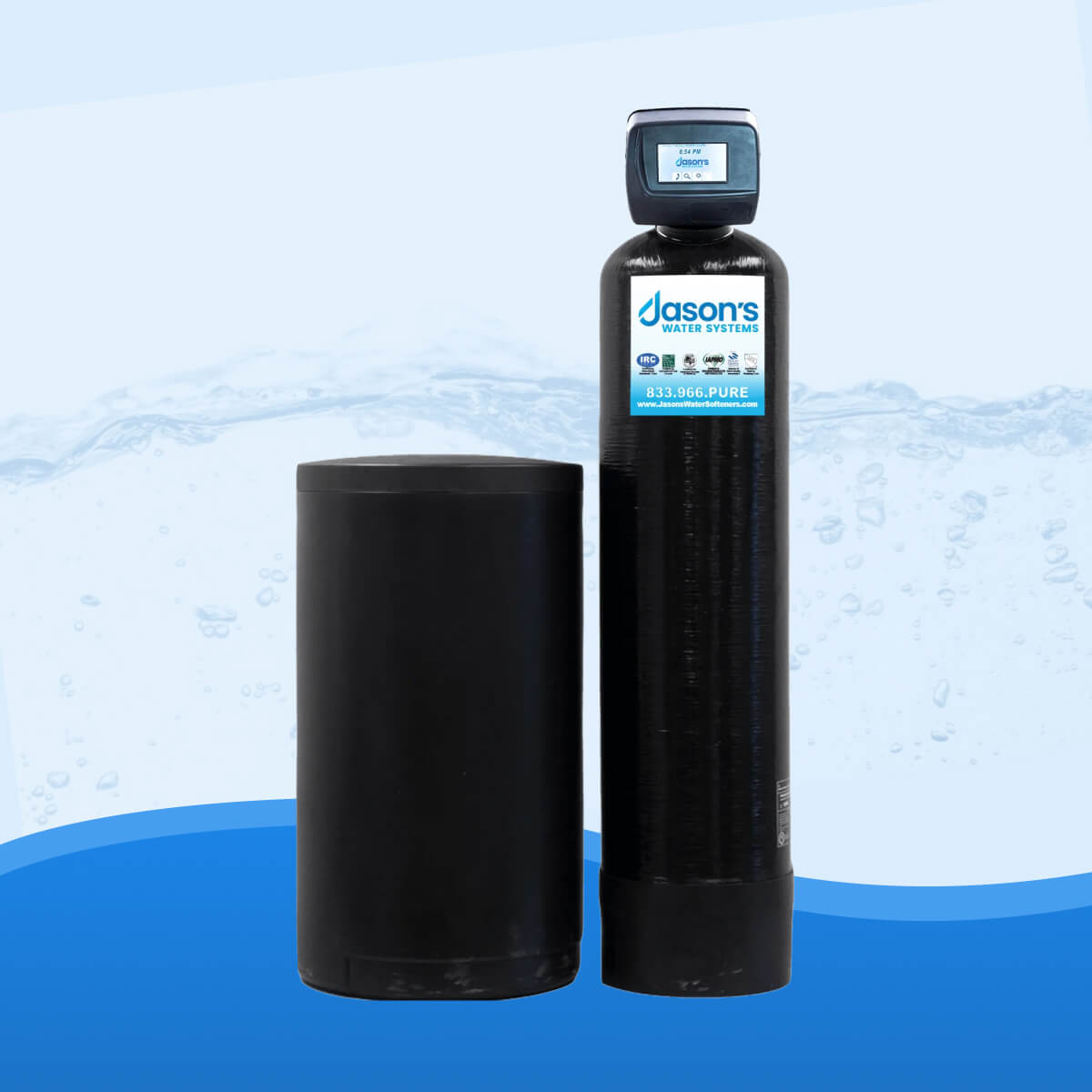
A whole-house water softening and filtration system treats water before it reaches the kitchen and other fixtures throughout the home.
During water softening, calcium and magnesium are reduced through ion exchange.
That means softened water can reach your:
- Dishwasher
- Kitchen faucet
- Refrigerator water line
- Washing machine
- Showers
- Water heater
- Bathroom fixtures
Reducing the hardness minerals in the incoming water can help limit the scale, spots, and mineral deposits that repeatedly appear around the home.
Find Out How Hard Your Water Is
Visible mineral buildup can be a useful warning sign, but testing your water is the best way to understand your home's actual hardness level.
A water test can help identify the conditions in your water and determine whether a water softening or filtration system may be appropriate for your home.
Jason’s Water Systems offers free water testing for homeowners who want to better understand their water before choosing a treatment system.
Frequently Asked Questions
What does hard water buildup look like in a kitchen?
Hard water buildup often looks like white or chalky residue, cloudy film, water spots, or crust around faucets, sinks, dishwashers, and refrigerator water dispensers.
What causes the white residue around my kitchen faucet?
The residue is often caused by calcium and magnesium left behind after hard water droplets evaporate.
Why does my dishwasher have white buildup inside?
Hard water minerals can accumulate on dishwasher filters, spray arms, racks, heating components, and interior surfaces as the machine repeatedly uses mineral-rich water.
Why do my glasses look cloudy after going through the dishwasher?
Hard water can leave calcium and magnesium deposits on glassware as water dries, creating a cloudy appearance or visible water spots.
Can I clean hard water deposits with vinegar?
White vinegar can help dissolve some mineral deposits. Always check the cleaning instructions for the specific surface or appliance before using acidic cleaning products.
Will cleaning my kitchen solve a hard water problem?
Cleaning can remove existing mineral deposits, but it does not change the calcium and magnesium levels in the incoming water. New hard water buildup may continue to form.
Will a water softener help reduce hard water buildup?
Yes. A water softener reduces calcium and magnesium before water travels throughout the home, helping limit the minerals responsible for recurring scale, spots, and residue.
How can I find out if I have hard water?
A water hardness test can determine the amount of hardness minerals in your water. Jason’s Water Systems provides free water testing to help homeowners understand their water quality.
Stop Cleaning the Same Hard Water Buildup
If white residue keeps returning around your dishwasher, faucet, drying rack, or refrigerator water dispenser, your cleaning routine may not be the problem.
Your water may be leaving the minerals behind.
Jason’s Water Systems has been helping Texas homeowners understand and treat hard water since 1979.
Schedule your free water test and speak with a Jason’s Water Systems specialist about the water in your home.