Hard Water Dishwasher Problems: How a Water Softener Changed One San Antonio Home
Quick Answer: Can Hard Water Damage Your Dishwasher?
Yes. Hard water can leave calcium and magnesium deposits inside your dishwasher, creating scale buildup on spray arms, heating elements, and interior surfaces. It can also leave cloudy film and water spots on dishes while making detergent less effective.
A whole house water softener removes hardness minerals before the water reaches the dishwasher, helping reduce mineral buildup, improve cleaning performance, and prevent the same hard water stains from coming back after every cycle.
Key Takeaways
- Hard water contains calcium and magnesium that can leave mineral buildup throughout a dishwasher.
- Hard water deposits can affect spray arms, heating elements, cleaning performance, and the appearance of dishes and glassware.
- Dishwasher detergent and rinse aid may help manage symptoms, but they do not remove the source of hard water.
- White vinegar, citric acid, and regular maintenance can help remove mineral buildup that has already formed.
- A whole house water softener removes hardness minerals before water reaches the dishwasher, helping prevent hard water buildup throughout the home.
- San Antonio’s very hard water makes whole-home water softening especially useful for homeowners dealing with recurring scale and residue.
Hard water can make even a good dishwasher look like it is doing a bad job.
Cloudy glasses, chalky residue, water spots, mineral deposits, and a dishwasher interior coated with hard water buildup are all common problems in homes with very hard water. In San Antonio, where tap water is known for significant hardness, those problems can show up quickly.
One Jason’s Water Systems customer, Lenada, saw the difference firsthand.
When our team originally planned to film at her home, we expected to capture her badly stained dishwasher as the “before” shot. But there was one problem: by the time we arrived, the dishwasher was already clean.
She had not replaced it. She had not spent hours scrubbing it with dishwasher cleaner. She had simply been running it after having a Jason’s water softener installed.
And the hard water stains were disappearing.
“What Do You Use?”
Lenada had been dealing with hard water issues throughout her home when she asked a friend a simple question:
“What do you use?”
Her friend recommended Jason’s Water Systems.
Emily came to Lenada’s home, talked with her about the hard water problems she was experiencing, and helped her choose a water softening system.
About six weeks later, the results were showing up in places Lenada had been fighting to keep clean for years.
Her dishwasher was one of the biggest surprises.
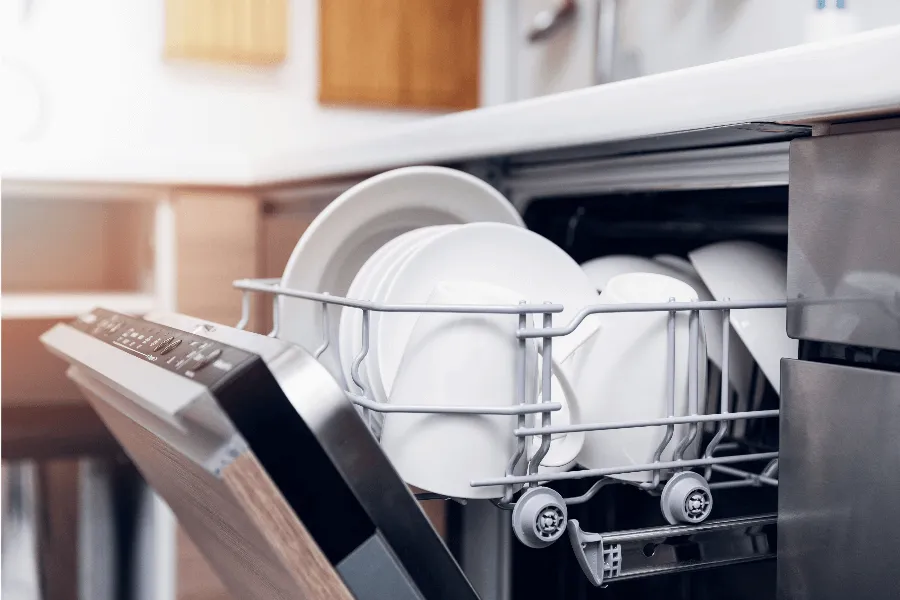
The stainless steel interior had previously been heavily stained by hard water buildup. When our team returned to her home expecting to photograph the buildup, the dishwasher was already dramatically cleaner.
Lenada told us she had simply run the machine several times after her water softener installation.
The soft water was doing the work that repeated cleaning had struggled to accomplish.
What Does Hard Water Do to a Dishwasher?
A hard water dishwasher problem starts with the minerals dissolved in the incoming water.
Hard water contains elevated levels of calcium and magnesium. When water evaporates or is heated during a wash cycle, those minerals can remain behind.
Over time, mineral deposits can collect on:
- The stainless steel tub
- Spray arms and spray jets
- Heating elements
- The top rack and bottom rack
- Filters
- Seals
- Dishes and glassware
That hard water buildup often appears as a cloudy film, white crust, chalky residue, or visible water spots.
The same minerals can also create limescale buildup in plumbing, coffee makers, a coffee pot, water heaters, and other water-using equipment.
Why Your Dishes Can Still Look Dirty After a Full Cycle
One of the most frustrating things about hard water is pulling supposedly clean dishes out of the dishwasher and seeing them covered in spots.
The dishes may technically be clean. What you are seeing may actually be hard water minerals left behind during the rinse cycle.
Hard water can also interfere with detergent.
Dishwasher detergent contains ingredients designed to loosen food, grease, and residue. But when detergent has to interact with high levels of calcium and magnesium, cleaning performance can suffer.
That may lead homeowners to:
- Use more detergent
- Switch to powdered detergent
- Add dishwasher rinse aid
- Run another dishwasher cycle
- Increase the wash temperature
- Buy specialized dishwasher cleaner
- Hand-wash cloudy glasses after the machine finishes
You can spend a lot of time treating the symptoms without changing the water causing them.
Does Rinse Aid Help With Hard Water?
Yes. Rinse aid can help reduce hard water spots and cloudy film on dishes.
Dishwasher rinse aid helps water sheet off dishes instead of forming droplets that can dry into visible mineral spots.
For homes with mild to moderate water hardness, rinse aid can make a noticeable difference.
But rinse aid does not remove calcium and magnesium from the water itself.
If your dishwasher rinse aid dispenser always seems empty, you are constantly adjusting detergent, and the mineral buildup keeps returning anyway, the underlying issue may be your water hardness rather than the products you are using.
Rinse aid can help manage hard water.
A water softener addresses the hard water itself.
Can Vinegar Remove Hard Water Stains From a Dishwasher?
White vinegar can help dissolve some existing hard water deposits.
Homeowners sometimes use white vinegar during an empty dishwasher cycle to loosen mineral buildup and residue. Citric acid is another common descaling ingredient used to remove hard water stains and calcium deposits.
Lemon juice contains citric acid as well, although a purpose-made dishwasher cleaner or citric acid product is generally easier to use consistently.
If you are cleaning existing hard water buildup, always follow your dishwasher manufacturer’s cleaning instructions. Certain materials and components may not tolerate repeated acid exposure.
Cleaning methods such as vinegar or citric acid can help get rid of mineral deposits that are already there.
They do not prevent new hard water deposits from forming during the next wash cycle.
That distinction is what makes Lenada’s experience so interesting.
She had cleaned hard water residue before. After installing the water softener, she noticed the buildup was no longer being replenished at the same rate.
Her Dog’s Water Bowl Told the Same Story
The dishwasher was not the only place Lenada noticed a difference.
She also has a large tower-style water bowl for her dog.
Before the water softening system was installed, Lenada said the bottom of the bowl would become crusted with hard water buildup. Cleaning it could take about 30 minutes.
After several weeks with soft water, she tried cleaning it again.
She added water, soap, and a little vinegar, let it sit, and came back later.
According to Lenada:
“I came back and wiped it clean. It was amazing.”
That is the same mineral problem appearing in two very different places.
If hard water minerals are visibly building up on a dog bowl and inside a dishwasher, they are also traveling through the rest of the home’s plumbing and water-using appliances.
Hard Water Buildup Can Affect More Than Appearance
The cloudy glasses and white residue are annoying, but hard water buildup is not only cosmetic.
Mineral buildup can collect around dishwasher spray arms and jets. As openings become restricted, water flow and washing performance may decline.
Scale buildup can also accumulate around heating elements.
That matters because dishwashers rely on hot water and heat during parts of the wash and drying process.
Your water heater is dealing with the same mineral-rich water before that hot water ever reaches the dishwasher. Hard water scale can accumulate in water heaters as well, adding another reason homeowners in very hard water areas pay attention to water treatment.
Over time, continued hard water conditions may contribute to reduced equipment efficiency, increased maintenance, and potentially costly repairs.
Can Hard Water Ruin a Dishwasher?
Hard water does not mean your dishwasher will suddenly stop working.
But repeated exposure to hard water minerals can create conditions that are harder on the machine over time. The same issue can affect other water-using equipment, which is why protecting appliances from hard water matters throughout the home.
Hard water scale can collect in:
- Spray jets
- Heating components
- Water lines
- Filters
- Internal surfaces
Regular maintenance can help remove hard water buildup before it becomes severe.
You can clean spray arms, inspect filters, use an appropriate dishwasher cleaner, and periodically descale the machine.
But if your house continues supplying very hard water every day, the machine encounters the same minerals during every cycle.
Preventing hard water buildup at the source is different from repeatedly cleaning it away.
How a Whole House Water Softener Helps
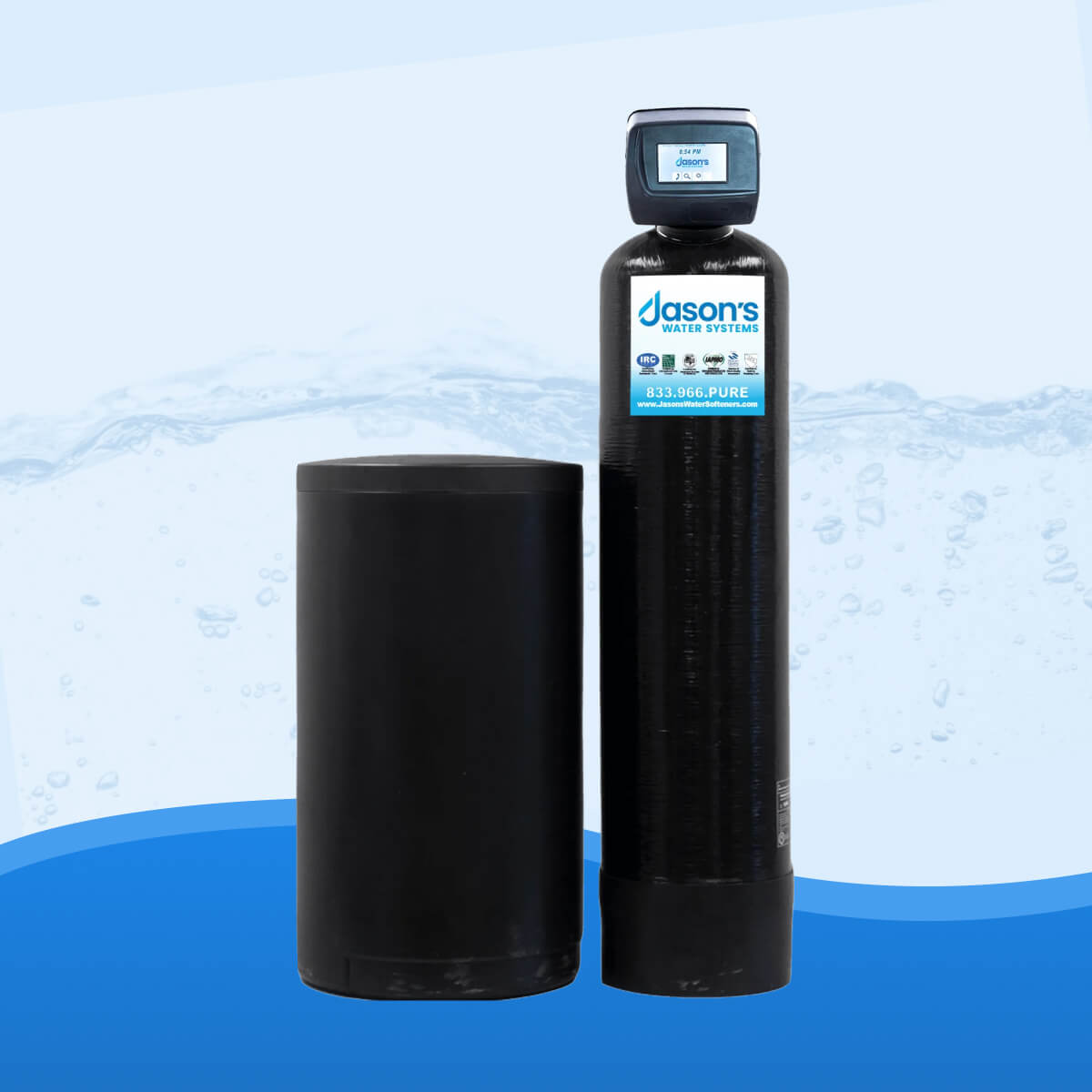
A whole house water softener and filtration system treats the water before it reaches the dishwasher.
During water softening, ion-exchange resin removes calcium and magnesium from the incoming water.
Instead of trying to remove hard water stains after each dishwasher cycle, the goal is to greatly reduce the hardness minerals creating those stains in the first place.
Soft water can help:
- Prevent hard water buildup inside the dishwasher
- Reduce hard water spots on dishes and glassware
- Improve detergent performance
- Reduce soap scum
- Keep spray arms and other components cleaner
- Limit mineral deposits throughout plumbing
- Protect other appliances that use water
And because it is a whole house water softener, the benefits are not limited to the dishwasher.
The same softened water reaches your washing machine, showers, faucets, water heater, and other fixtures.
Does Soft Water Mean You Need Less Dishwasher Detergent?
Often, yes.
Because soft water contains far less calcium and magnesium, detergent does not have to work against the same concentration of hard water minerals.
That means homeowners may find they can use less detergent while still getting clean dishes.
In fact, using the same amount of detergent after installing a house water softener can sometimes be too much.
If you recently switched from hard water to soft water and start noticing excess suds or detergent residue, check the detergent manufacturer’s recommendations and experiment with a smaller amount.
The goal is not to compensate for hard water anymore.
What About Hot Water?
Hot water remains an important part of dishwasher cleaning.
Many dishwasher manufacturers recommend household hot water around 120°F for effective washing, although you should always follow the instructions for your specific machine and water heater.
Running excessively hot water will not solve a hard water problem.
The minerals are still present.
In fact, heat can encourage calcium minerals to form hard water scale.
That is one reason heating elements and water heaters are common places to find mineral deposits in homes with high hardness levels.
How to Deal With an Existing Hard Water Dishwasher
If you already have significant mineral buildup, installing a water softening system will not necessarily make every deposit disappear overnight.
Existing scale may still need to be cleaned. If mineral residue is showing up elsewhere in the home, see our guide to removing hard water stains.
A practical approach can include:
- Clean the dishwasher filter. Remove trapped food and residue according to the manufacturer’s instructions.
- Inspect the spray arms. Mineral deposits can partially clog spray openings.
- Use an approved dishwasher cleaner. Products formulated for mineral buildup can help loosen existing scale.
- Consider white vinegar or citric acid if your manufacturer permits it. These acids can help dissolve calcium deposits.
- Use rinse aid while the existing buildup clears. Rinse aid can help reduce spotting during the transition.
- Address the water hardness. If hard water is the source of the problem, a water softener can help prevent hard water deposits from continually returning.
The bad news is that cleaning alone cannot change the mineral content of the incoming water.
The good news is that you do not necessarily have to spend the rest of your dishwasher’s lifespan scrubbing the same scale over and over.
San Antonio Hard Water Makes This Especially Relevant
San Antonio is known for very hard water.
Very hard water generally falls around 15 to 20 grains per gallon, and hardness levels across the San Antonio area can fall within that range.
Those hard water minerals are why homeowners regularly deal with:
- Hard water spots
- Chalky residue
- Soap scum
- Cloudy glasses
- Mineral buildup
- Scale inside water heaters and appliances
If every cleaning cycle seems temporary, the problem may not be your dishwasher detergent, rinse aid, or machine.
It may simply be the water.
The “Before” Photo We Never Got
Lenada’s story gave us an unusual problem.
We went to her house expecting to document a dishwasher covered in hard water stains.
Instead, we opened the door and found a clean stainless steel dishwasher.
The “before” had already started disappearing.
For Lenada, the difference showed up in her dishwasher, her dog’s water bowl, and the everyday cleaning she no longer had to fight quite so hard.
After about six weeks with her Jason’s system, she summed it up simply:
“It has been fantastic.”
Sometimes the best water softener testimonial is not a technical measurement.
Sometimes it is opening a dishwasher you expected to be covered in mineral buildup and realizing there is almost nothing left to photograph.
Tired of Cleaning the Same Hard Water Stains?
If hard water stains keep returning to your dishwasher, dishes, faucets, glassware, coffee maker, or other surfaces, cleaning products may only be addressing the buildup after it happens.
Jason’s Water Systems can test your home's water hardness and help determine whether a whole house water softener is the right solution.
Our systems are designed for Central Texas hard water and provide whole-home softening and filtration from the point where water enters your home.
Schedule a free water test with Jason’s Water Systems and find out what is actually in your water.