How Water Softeners and Dishwashers Help With Cleaning Dishes
If you’re researching water softeners and dishwashers, you may already be dealing with cloudy glasses, white spots on dishes, or chalky buildup inside your machine. These problems are often linked to hard water, which contains dissolved calcium and magnesium. When water hardness is high, those minerals can remain behind as visible deposits on dishes, glassware, the sink, and internal dishwasher components. A water softener removes these hardness minerals before they reach the appliance, allowing soft water to help reduce spotting, scale buildup, and other common dishwasher cleaning problems.
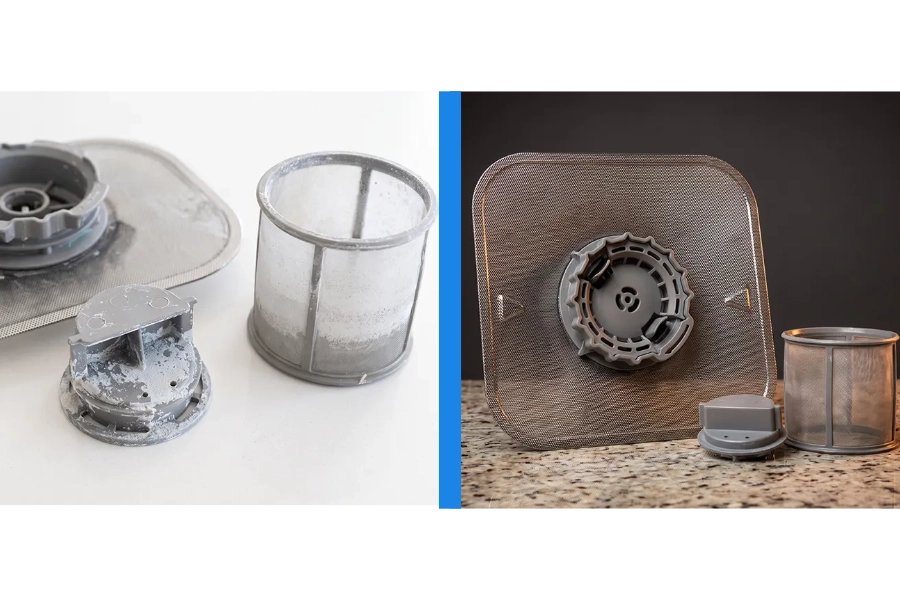
Over time, a hard-water scale can also collect around spray components and the heating element, making the dishwasher harder to keep clean and potentially affecting performance. This is where the connection between water softeners and dishwashers becomes important. By treating water hardness before it reaches the appliance, a water softener can help reduce mineral deposits, improve detergent performance, and make everyday dishwashing more effective.
For families dealing with repeat spotting, scale buildup, or cloudy glassware, improving the water itself can be a more practical long-term solution than simply adding more detergent or repeatedly cleaning the machine.
Quick Answer
A water softener helps your dishwasher by removing hardness minerals such as calcium and magnesium before the water reaches the machine. With fewer minerals in the water, there is less material available to form cloudy film, white spots, and scale on dishes, glassware, and internal dishwasher components. Softened water also allows detergent to work more efficiently, which can improve cleaning performance and reduce the need for repeated wash cycles.
A whole-house softening and filtration system treats water before it reaches the dishwasher and other water-using appliances, helping reduce hard-water problems throughout the home rather than at just one point of use.
Key Takeaways
- Hard water contains calcium and magnesium that can leave cloudy film, white spots, and mineral deposits on dishes and glassware.
- Repeated exposure to hard water can contribute to scale buildup inside the dishwasher, including around internal components and the heating element.
- Soft water helps detergent work more effectively because it does not have to interact with as many hardness minerals.
- A properly sized water softener can reduce spotting, filming, and mineral buildup before they become recurring cleaning problems.
- Testing your water hardness before choosing a system helps determine the right treatment approach for your home.
- A whole-house system can also help protect pipes, sinks, water heaters, washing machines, and other appliances from hard-water scale.
Why Does Hard Water Leave Dishes and Glassware Cloudy?
Hard water contains dissolved minerals, mainly calcium and magnesium. During a dishwasher cycle, that water is sprayed across dishes, glasses, and utensils. As the water heats and eventually dries, some of those minerals can remain behind as white spots, cloudy film, or chalky mineral deposits. This is why glassware may still look dull or hazy even after a full wash cycle.
The harder the water, the more noticeable the problem can become. In homes with very hard water, mineral residue may also appear around the sink, faucets, shower glass, and other places where water regularly evaporates. Adding more detergent may improve cleaning in some cases, but it does not remove the hardness minerals causing the deposits in the first place.
It is also important to distinguish hard-water film from permanent glass damage. Mineral film can often be cleaned away, while glass etching is permanent. Etching may occur when too much detergent is used with very soft water, especially during hot or long wash cycles. For that reason, homeowners who install a water softener may also need to adjust detergent use based on their dishwasher manufacturer’s recommendations.
What Hard Water Does Inside Your Dishwasher
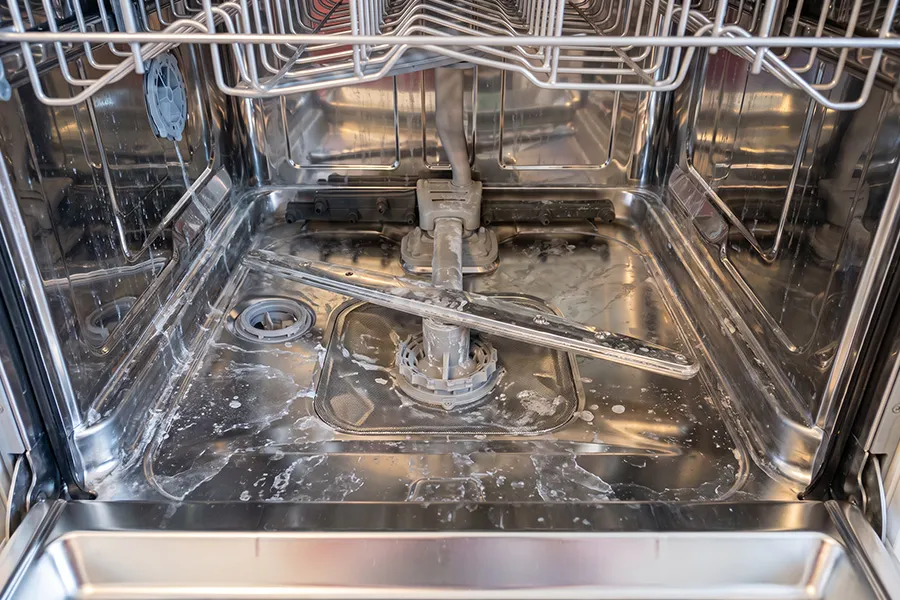
Hard water does more than leave spots on dishes. The same calcium and magnesium that create cloudy glassware can also collect inside the dishwasher itself. Because the machine repeatedly uses hot water, mineral deposits can gradually build on internal surfaces and components, especially in areas where water is heated, sprayed, or allowed to dry.
Scale Can Build Up on Internal Components
Over time, scale buildup can form around spray arms, jets, plumbing connections, filters, and the dishwasher’s heating element. These deposits may make the machine harder to maintain and can interfere with the way water moves through the system. In very hard water areas, this buildup can become more noticeable because every wash cycle introduces another round of dissolved minerals into the machine.
Mineral Deposits Can Affect Dishwasher Performance
A dishwasher depends on consistent water flow, heat, and detergent action to clean properly. When scale collects on internal equipment, it can reduce efficiency and make it harder for the machine to perform at its best. Mineral deposits around spray openings can restrict water distribution, while buildup on the heating element can create an extra layer between the element and the water it needs to heat.
Existing Scale May Need to Be Removed
If a dishwasher already has visible mineral deposits, descaling may be necessary. Some appliance manufacturers recommend products such as citric acid to help break down existing hard-water residue, provided the method is approved for that specific machine.
Descaling can help remove buildup that is already there, but it does not change the hardness of the water entering future cycles. A water softener addresses the problem earlier by reducing the calcium and magnesium before that water reaches the dishwasher.
How Soft Water Helps Your Dishwasher
A water softener treats hard water before it reaches the dishwasher by removing calcium and magnesium through ion exchange. That change can improve the way the dishwasher cleans, reduce recurring mineral deposits, and help keep internal components cleaner over time.
Fewer Spots and Mineral Deposits
When hardness minerals are removed from the water, there is less calcium and magnesium available to dry onto dishes and glassware. That means softened water can leave behind fewer white spots, cloudy streaks, and chalky deposits after a wash cycle.
This can be especially noticeable on clear glass, dark dishes, silverware, and other surfaces where mineral residue stands out. Instead of repeatedly rewashing dishes or wiping away spots by hand, homeowners may get more consistent results from the dishwasher itself.
Better Detergent Performance
Hardness minerals can interfere with the way detergent works. In hard water, part of the detergent may react with calcium and magnesium instead of focusing entirely on grease, food particles, and other soils.
With soft water, detergent can work more efficiently because there are fewer hardness minerals competing with the cleaning process. This can improve overall dishwasher performance and help dishes come out cleaner without relying on excessive amounts of soap.
You May Need Less Detergent
One of the practical benefits of softened water is that less detergent may be needed to achieve the same or better cleaning results. A Water Quality Research Foundation study found substantial detergent savings under controlled dishwasher testing, with savings approaching 70% at high hardness levels when softened water was used.
That does not mean every household will use 70% less detergent. Actual results depend on water hardness, dishwasher type, detergent formula, load size, and wash cycle. The key takeaway is that soft water can reduce the amount of detergent needed while still supporting strong cleaning performance. With soft water, detergent can work more efficiently, and some testing has shown good results even at half the usual dose. Hard water can also leave soap scum buildup in fabrics, which is one reason softened water can improve cleaning beyond dishes.
For families dealing with very hard water, this can mean fewer deposits, cleaner dishes, less soap waste, and a more efficient dishwasher routine over time, with lower detergent use also helping reduce overall cost.
Can You Use Too Much Detergent With Soft Water?
Yes. Once a water softener is installed, homeowners may not need the same amount of detergent they used when washing with hard water. Because soft water contains far less calcium and magnesium, detergent can work more efficiently and may require a smaller dose to achieve good cleaning results.
Using too much detergent can create a different problem. In very soft water, excessive detergent—especially when combined with hot water and long dishwasher cycles—can contribute to permanent etching on glassware. That kind of damage is different from the cloudy mineral film caused by hard water because etched glass cannot simply be cleaned back to its original appearance.
The practical approach is to follow the dishwasher and detergent manufacturer’s recommendations, then fine-tune based on actual performance after the softener is installed. A Water Quality Research Foundation study found substantial detergent savings, and some testing looked at reduced amounts—including about half of the manufacturer-recommended dose—while still showing the cleaning advantages of softened water. If dishes come out clean with less detergent, there is no benefit to using more.
A good balance between water hardness, detergent amount, water temperature, and cycle length helps protect glassware while still getting the cleaning benefits of softened water. Over time, using less detergent and avoiding repeat wash cycles can also lower household costs in hard water areas.
Dishwasher Water Softener vs. Whole-House Water Softener
Some dishwashers come with a built-in dishwasher water softener. These compact systems have features that improve cleaning performance and help reduce spots and mineral deposits, but they treat only the water used by that appliance and require regular salt refills to regenerate the softening media.
A whole-house softener works at a much broader level. It treats hardness before water is distributed throughout the house, so softened water can reach:
- The dishwasher
- Washing machine
- Water heater
- Sinks and faucets
- Showers
- Household plumbing
- Other water-using appliances
This means a whole-house system can help reduce scale buildup in more than one place. Instead of protecting only the dishwasher, it can also help limit mineral deposits in pipes, fixtures, appliances, and other equipment that regularly uses water. The practical approach is to follow the dishwasher and detergent manufacturer’s recommendations, though homeowners may need to fine-tune detergent amount after a softener is installed.
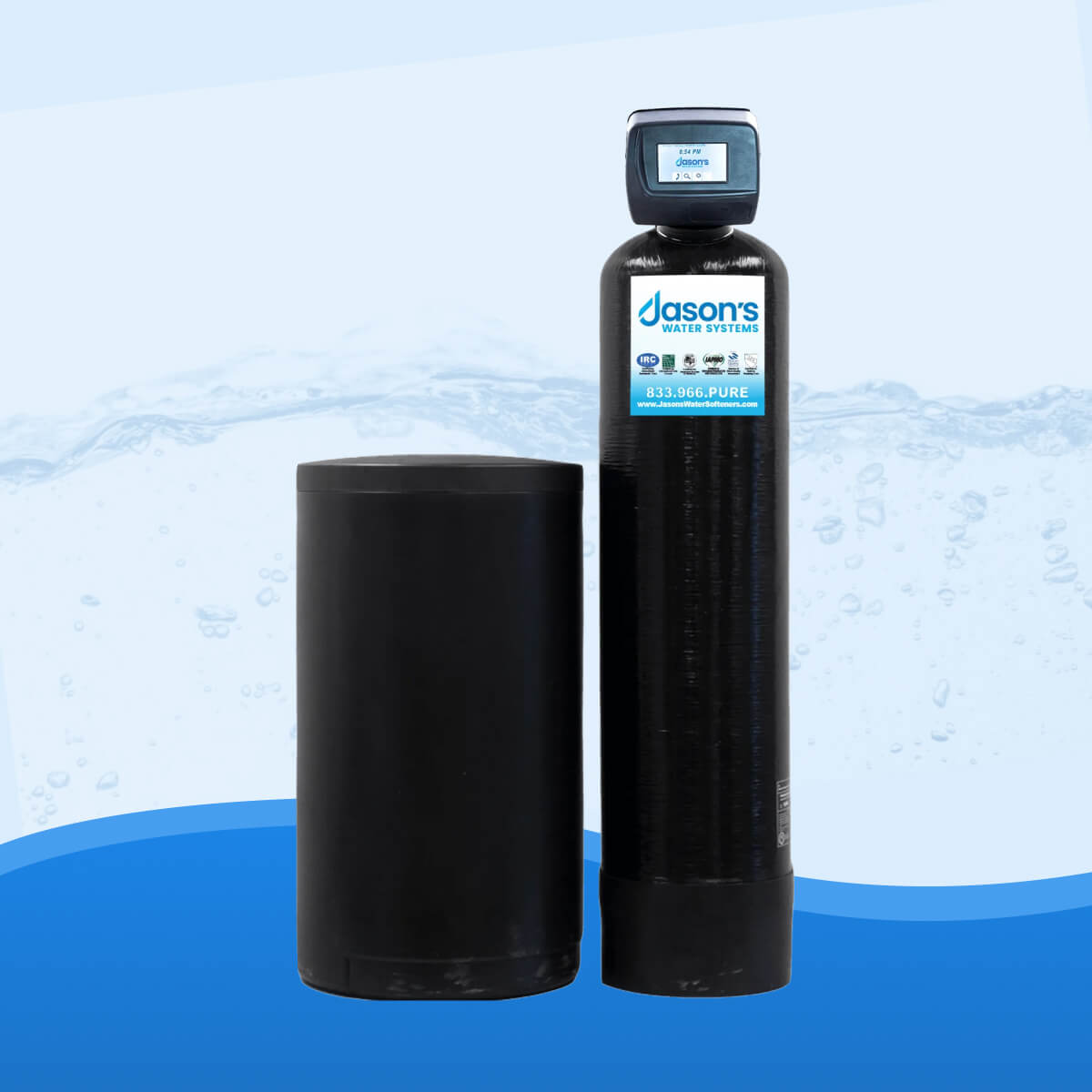
For homeowners looking for a more complete solution, Jason’s whole-house softening and filtration system combines water softening and filtration in one system. Softening targets calcium and magnesium, while filtration addresses additional water-quality concerns before the water is distributed throughout the home, and the upfront cost may make more sense than relying on an appliance-specific option alone.
What Changes Might Your Family Notice?
The benefits of softened water often show up in small, everyday ways. Instead of cloudy glassware, white spots, or a chalky film after each dishwasher cycle, dishes may come out looking cleaner and clearer. You may also notice less mineral residue inside the machine itself, which can make routine dishwasher maintenance easier over time.
Because detergent can work more effectively in soft water, some families may also find that they do not need as much soap to get good results. That can mean fewer repeat wash cycles, less hand-rinsing at the sink, and a more practical cleaning routine overall.
A water softener can also help reduce the scale that affects other areas of the house, so the difference may not stop with the dishwasher. Homeowners may notice fewer mineral deposits around faucets, fixtures, and other water-using appliances as well.
Customer Experience With Cleaner Dishes
Love my water system. Soft hair, skin and no hard water stains on my dishes or shower. Installation was quick and easy. Staff is friendly too!
— Greyson Mb, Jason’s Water Systems Customer
Read more Jason’s Water Systems customer reviews.
How Do You Know If Hard Water Is Causing the Problem?
Cloudy dishes do not automatically mean your dishwasher needs to be replaced. A better first step is to look for the same hard-water symptoms in other areas of the house.
Common signs include:
- White or chalky mineral deposits on glassware
- Scale around the sink, faucets, or showerheads
- Cloudy shower glass
- Soap that does not lather well
- Repeated residue inside the dishwasher
- Stiff-feeling clothes after washing
- Buildup in pipes, fixtures, or other water-using equipment
Water hardness is typically measured in grains per gallon, and the right treatment system depends on the actual hardness level, household size, water use, and flow requirements. That is why it is better to have the water tested than to guess based only on spotting or scale.
Jason’s Water Systems can test your water and help determine whether hardness is affecting your dishwasher, plumbing, appliances, and overall water quality. Once the results are known, the system can be sized and installed for the specific needs of your home.
Protect More Than Just Your Dishwasher
A water softener can benefit more than the machine that cleans your dishes. Because a whole-house system treats hard water before it moves through the rest of the home, it can also help reduce scale buildup in pipes, faucets, sinks, water heaters, washing machines, and other water-using appliances.
That matters because the same calcium and magnesium that leave deposits on glassware can also accumulate inside plumbing and equipment over time. Reducing those hardness minerals can help protect flow, make fixtures easier to maintain, and support the efficiency and long-term performance of appliances that regularly use hot water.
Softening and drinking water filtration serve different purposes, so the right treatment depends on what is actually present in your water. Jason’s whole-house system combines softening and filtration in one unit, helping address hardness while also improving overall household water quality.
For many homeowners, that makes a softener more than a dishwasher solution, it becomes an investment in protecting the entire home’s water system.
Get a Free Water Test From Jason’s Water Systems
If cloudy glassware, repeated scale buildup, or poor dishwasher performance keeps coming back, the first step is finding out how hard your water actually is. Spots on dishes can point to a hardness problem, but a professional water test gives you a clearer picture of the minerals and other conditions affecting water throughout your home.
Jason’s Water Systems offers a free water test to help homeowners understand their water hardness and determine whether a whole-house softener is the right solution. Testing also helps ensure the system is properly sized for your household, water use, and specific treatment needs.
A properly selected system can do more than improve dishes and glassware. It can help reduce scale throughout the plumbing, support appliance performance, and make everyday cleaning more efficient.
Schedule Your Free Water Test
Find out what is in your water and take the first step toward cleaner dishes, less scale, and better-performing appliances throughout your home.
Cleaner Dishes Start With Better Water
If you are constantly dealing with cloudy glasses, white spots, excess detergent, or scale inside your dishwasher, improving the water feeding the machine can make a meaningful difference. A properly sized water softener addresses hardness before calcium and magnesium reach your dishwasher, plumbing, and other appliances.
Jason’s Water Systems can help you determine whether hard water is behind your cleaning problems with a free water test. From there, the team can recommend a solution based on your home, water hardness, and treatment needs.
Explore Jason’s whole-house softening and filtration system or contact Jason’s Water Systems to schedule your free water test today.